In November 2024, the Córdoba team joined the DinoImpact project and actively participated in planting native Cina Cina trees at Sarmiento Park, in collaboration with Forestatón. Check out the map and find the exact spot where DinoCloud contributed to environmental protection through this reforestation initiative.
Learn more about the initiative, its impact, and the organizations that teamed up to make it happen here. We also took part in their education and outreach activities, and we want our community to keep learning and taking advantage of the resources provided by Forestatón: find out more about Córdoba’s native species here.
Undoubtedly, this is an initiative we will bring to other provinces and places, expanding our commitment to the planet.
About the Initiative
As in previous years, we launched a solidarity campaign to support children as they head back to school. This initiative is part of one of our fundamental pillars, which seeks to create a positive impact and provide growth opportunities for those who need it most.
On this occasion, the beneficiaries were the students of the Piedras Blancas School, located in El Diquecito, La Calera, Córdoba. Thanks to the collaboration of our team and the commitment of everyone who participated, we managed to gather school supplies and essential materials so that the students could start the school year with everything they need to learn, grow, and dream big. This act of solidarity motivates us to continue working towards a fairer and more inclusive future, where education serves as a catalyst for social transformation.
What We Did
We organized a solidarity collection among our collaborators, who had the opportunity to participate in different ways. They could bring school supplies directly to our Córdoba office, where the collection was centralized, or make a monetary donation through Mercado Pago or bank transfer. With the funds raised, we moved forward with the purchase of additional school supplies, thus expanding the scope of our support and ensuring that students received everything needed to start the school year with enthusiasm and motivation. This initiative once again demonstrated our team’s commitment and solidarity in making a positive impact on the community.
Initiative Results
Funds Raised via Mercado Pago:$72,899 ars
School Supplies Collected: 1 kit with various school items
Dino’s Contribution: $420,000 ars
Total Donation: Various school supplies to meet the specific needs of the children and the school, including:
50 ruled and grid notebooks
60 acrylic paints with brushes
10 boxes of colored pencils
60 black pencils
15 backpacks
Donated school supplies kit
The impact of this initiative was extremely positive, directly benefiting 60 children who attend the Piedras Blancas School. Thanks to the commitment and solidarity of our collaborators, we were able to provide them with the resources needed to start the school year with enthusiasm and better learning tools. This action not only alleviated part of the family burden in going back to school, but also reinforced our commitment to education and community development.
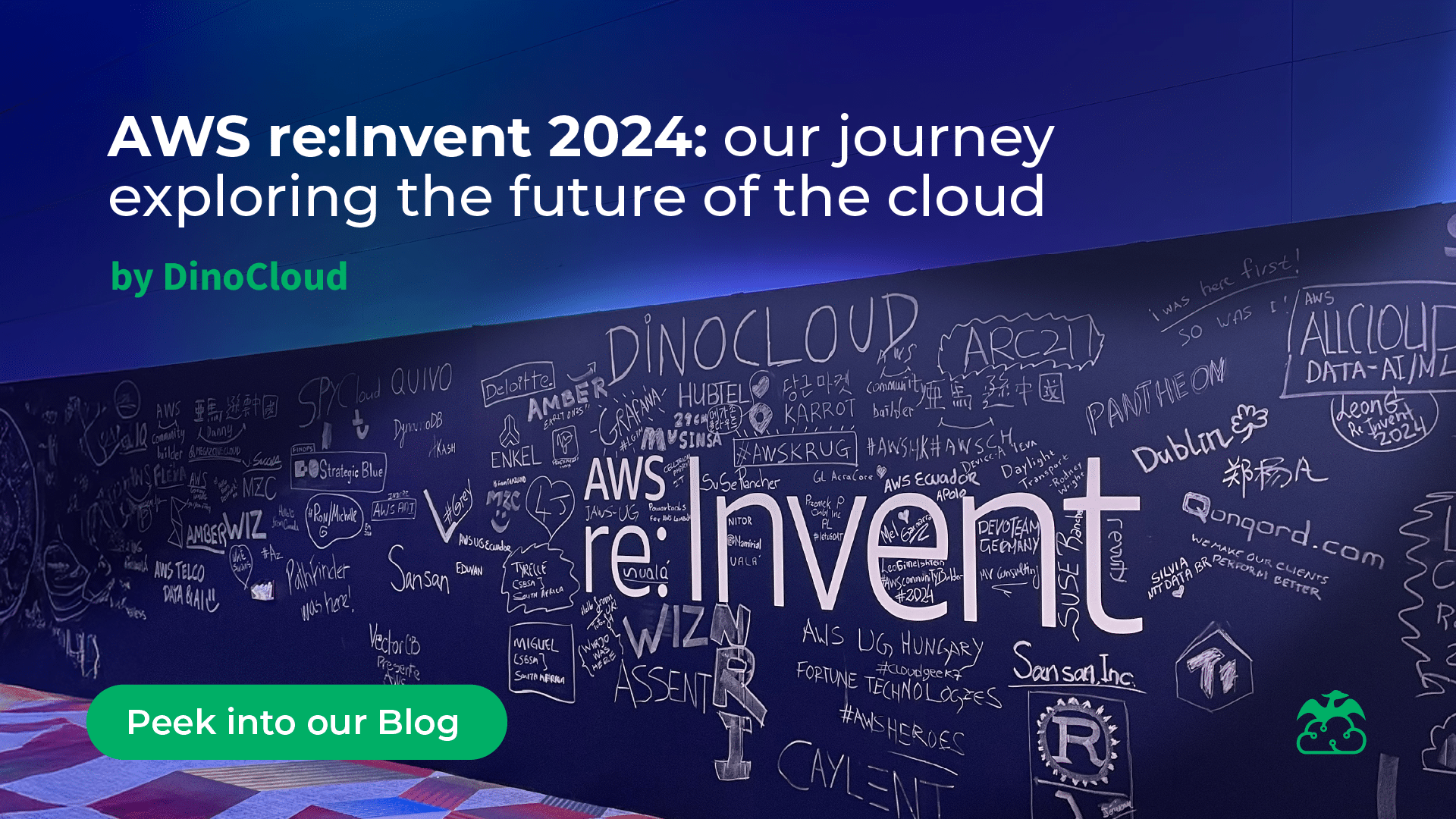
DinoCloud at AWS re:Invent
AWS re:Invent 2024 was much more than a tech event; it was a gathering where the future of cloud development, artificial intelligence, and digital sustainability took shape. Over the course of a week in Las Vegas, we connected with experts, leading companies, and partners like us to share an immersive experience filled with learning, innovation, and collaboration.
As every year, AWS dedicated much of the event to unveiling a series of announcements that will redefine how organizations leverage the cloud and artificial intelligence in 2025. In this new #DinoBlog, we explore the most significant launches set to shape the next technological era.
The transformative power of artificial intelligence
AWS reinforced its commitment to artificial intelligence with announcements aimed at making it more accessible, scalable, and efficient:
Amazon Bedrock received a major update, now supporting more foundational models. This provides businesses with greater flexibility to choose and customize the models that best fit their specific needs.
CodeWhisperer AI 2.0: the code generation tool took a big leap forward by adding multi-cloud support and new programming languages, making it more inclusive and functional for developers across various platforms.
GenAI Workflow Studio: a solution designed to streamline the adoption of generative AI, enabling organizations to design workflows without requiring advanced data science skills.
AWS also introduced improvements to Amazon SageMaker, creating a more user-friendly environment for experimenting with and training AI models.
Hybrid and edge architectures: toward limitless connectivity
Recognizing that the future is hybrid and multi-cloud, AWS introduced solutions to optimize operations across diverse environments:
AWS EdgeOps: a suite empowering businesses to operate and manage edge applications more efficiently, with advanced monitoring and dynamic scalability.
QuickSight Omni: breaks barriers by extending analytics capabilities to data hosted outside of AWS, seamlessly integrating hybrid and multi-cloud platforms into a single interface.
Amazon VPC Lattice Enhancements: new features that streamline the deployment of microservices architectures, optimizing connectivity between private networks and multi-cloud resources.
Security as a strategic priority
In an increasingly digital world, AWS strengthened its commitment to security with solutions that simplify data protection and ensure regulatory compliance:
AWS DataSafe: a tool that automates data encryption, detects vulnerabilities, and provides real-time reporting to help meet international regulations.
IAM Policy Advisor: an AI-driven solution to optimize access policy management, reducing human error in permission configurations.
Toward a greener, more sustainable cloud
Sustainability was a key theme at re:Invent 2024, with AWS unveiling innovations to reduce the environmental impact of workloads:
GreenCompute: enables users to analyze the energy consumption of their cloud operations and offers recommendations to optimize resource usage.
Amazon WindFarm API: a platform connecting renewable energy projects with cloud operations, maximizing energy efficiency in real time.
What this means for businesses
AWS made it clear that the path to 2025 is shaped by the convergence of artificial intelligence, sustainability, and hybrid architectures. These announcements not only provide advanced tools but also present a unique opportunity for businesses to innovate, reduce costs, and scale their operations.
DinoCloud in this landscape
As an AWS Premier Partner, DinoCloud is more excited than ever to integrate these solutions into our services and projects. Each announcement from AWS allows us to continue delivering enhanced and tailored solutions to our partners and clients.
AI in the future of SME banking
Small and medium-sized enterprises (SMEs) account for 99% of all companies in the European Union and the United States. However, accessing adequate banking services and financing has long been a challenge for many of them. This is partly due to economic challenges and the legacy infrastructure many banks operate with, making it difficult to capitalize on the opportunities presented by this market.
But how can banks seize this opportunity while offering efficient and personalized services? The answer lies in artificial intelligence (AI) and machine learning (ML), technologies that are revolutionizing how financial institutions manage and serve their clients.
A challenging market with high potential
According to a recent analysis by the International Finance Corporation, 40% of micro, small, and medium-sized enterprises worldwide struggle to access credit. This sector faces a global financing gap of around $5.7 trillion. However, banks that manage to close this gap could reap enormous rewards.
Clemens Mueller, head of the banking platform George Labs at Erste Group, notes that “the SME market is significant and presents an untapped opportunity for many banks.” Historically, SMEs have valued personalized service and close relationships with their account managers, but technological advances now allow banks to provide this level of attention more efficiently and at scale.
Artificial intelligence as the key to transforming banking services
Artificial intelligence and machine learning are helping banks optimize their processes, reducing manual work and enabling high-quality experiences for SMEs more efficiently. A notable example is Banorte’s banking system in Mexico, which has implemented Maya, a virtual assistant capable of managing inquiries and executing financial transactions. Solutions like this not only improve the customer experience but also reduce the workload of relationship managers, allowing them to focus on more complex issues.
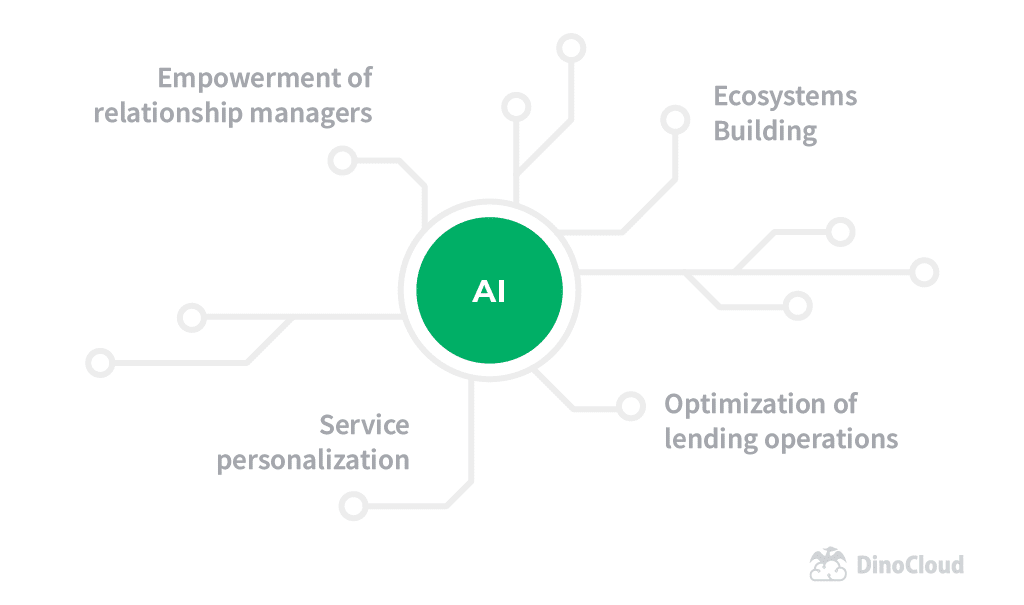
Empowering relationship managers with AI:
One of the first steps many banks are taking is implementing AI tools to support relationship managers behind the scenes. These solutions allow them to quickly access the information they need to respond to customer inquiries, optimizing response times and improving the accuracy of information provided.
According to Susan Davies, head of business banking at Santander UK, “AI solutions can quickly provide information to our employees, helping them feel empowered and enhancing the customer experience.” Additionally, Zoltan Illes, executive director of micro and small enterprise business development at MBH Bank in Hungary, comments that AI can significantly reduce the cognitive load on employees, making their work more efficient.
AI and service personalization:
One of the biggest challenges in SME banking has been offering personalized service at scale. However, with the use of AI, banks can better segment their customers, creating micro-segments with common behaviors and thus achieving a more tailored service.
“If AI helps us achieve dynamic segmentation, we can maximize the impact of the service model,” notes a strategy director for small business banking in Greece. This personalization not only improves the customer experience but also directly impacts loyalty and profit margins for banks.
Optimizing lending operations:
Another key area where banks are seeing significant results is in optimizing lending operations. AI and ML allow banks to accelerate risk assessment and decision-making processes, resulting in faster access to credit for SMEs. Dominic Provencal, head of business banking at Mauritius Commercial Bank, explains that thanks to AI-based credit scoring models, they can offer financing to their customers in just minutes.
Building ecosystems with AI:
The creation of ecosystems is another emerging trend in SME banking, where banks leverage AI to integrate external data that enhances personalization and customer engagement. “Developing capabilities beyond banking is where the magic happens because it adds real value for customers,” says Susan Davies from Santander.
The future of SME banking
As banks continue to adopt AI-driven solutions, they are building a future where SMEs will have faster, more efficient, and more personalized access to financial services. These technologies are not only helping banks optimize their operations but also enabling them to offer a “white-glove service” that once seemed impossible to achieve at scale.
In a context where access to credit is increasingly critical for the survival and growth of SMEs, banks that know how to leverage the capabilities of AI and machine learning will be better positioned to close the financial gap while generating long-term loyalty and value.
In conclusion, AI and ML are not just technological tools; they are the key to transforming SME banking, allowing banks to better serve their clients, improve profitability, and, most importantly, close a global financing gap that affects millions of businesses worldwide.
DinoCloud Welcomes Kurt Hopfer as Chief Delivery Architect to Lead North America Growth
DinoCloud announced today that Kurt Hopfer will be joining the company as Chief Delivery Architect leading business development, revenue growth, and operations for North America. His arrival represents a strategic milestone for DinoCloud, enabling us to enhance our offering for clients, gain a deeper understanding of their needs, and deliver services that truly position us as their strategic partner. This step is particularly important as we project significant growth in North America in the coming years.
As a chief technologist, Kurt brings over 20 years of experience guiding companies through cloud adoption and digital transformation. He has successfully led complex migrations and modernization efforts for global organizations in key verticals such as financial services, retail, healthcare, and manufacturing. His primary focus is on translating desired business outcomes into technical solutions leveraging Amazon Web Services (AWS) services and cloud-native technologies. Kurt will be partnering closely with AWS and other strategic partners to drive new opportunities for growth and innovation.
Kurt will be partnering closely with AWS and other strategic partners to drive new opportunities for growth and innovation. At DinoCloud, innovation and growth are part of our DNA, and we are constantly striving to stay in tune with the evolving needs of the market and our clients. With Kurt’s leadership, we are committed to maintaining our position at the forefront of the industry, ensuring that our solutions are always aligned with market demands and continue to deliver exceptional value to our clients.
About DinoCloud
DinoCloud is a leading AWS Premier Partner company in Latin America, formed by teams of professionals with the main objective of accompanying each of its customers to walk the path of learning and implementation of technology trends worldwide. It has success stories in different industries including: healthcare, financial services, transportation and logistics, e-commerce, software as a service and telecommunications, being official partners of the main cloud providers, and one of the most important AWS consulting partners in Latin America.
The AWS Managed Service Provider (MSP) program is an initiative by Amazon Web Services (AWS). It aims to empower partner organizations with deep expertise in delivering managed services on the AWS cloud platform. These AWS partners assist businesses in optimizing their AWS environment. They provide guidance on best practices, cost optimization, security, and more. The program demands partners to pass a thorough evaluation. This ensures they meet AWS’s high standards for technical proficiency, customer satisfaction, and operational excellence.
By partnering with an AWS MSP, businesses can tap into the partner’s specialized knowledge and resources. This accelerates their cloud transformation and maximizes the benefits of the AWS ecosystem. AWS MSPs offer a broad spectrum of services. These include infrastructure management, migration, cost optimization, and security monitoring. Their goal is to help customers fully leverage their AWS investment.
Key Takeaways
AWS MSPs are AWS partner organizations with deep expertise in delivering managed services on the AWS cloud platform.
They help businesses optimize their AWS environment by providing guidance on best practices, cost optimization, security, and more.
The AWS MSP program requires partners to undergo a rigorous evaluation process to ensure they meet AWS’s high standards.
Businesses can leverage the specialized knowledge and resources of AWS MSPs to accelerate their cloud transformation and maximize the benefits of the AWS ecosystem.
AWS MSPs offer a wide range of services, including infrastructure management, migration, cost optimization, and security monitoring.
Understanding the AWS Managed Service Provider (MSP) Program
The AWS MSP program identifies and supports AWS partner companies with top-notch skills in managing and optimizing client AWS environments. To be an AWS MSP partner, companies must pass a detailed application and validation process. This process ensures they meet AWS’s technical, operational, and customer satisfaction standards.
Becoming an AWS MSP Partner
After joining the program, AWS MSP partners gain access to specialized training, technical resources, and support for market entry. These benefits help them offer clients superior expertise and quality in migration, security, cost optimization, and managing AWS infrastructure and services.
The AWS Partner Program includes over 100,000 partners from 150+ countries, with nearly all Fortune 100 and a majority of Fortune 500 companies using AWS Partner solutions. To specialize in the AWS MSP Program, companies must pass thorough technical validation and assessments of their AWS solutions.
The AWS Competency Program highlights AWS Partners with deep technical knowledge and proven success in various specialized areas across industries. AWS partners also show the program’s effectiveness and profitability, generating a multiple of $6.40 for every $1 of AWS revenue.
Key Benefits of Becoming an AWS MSP Partner
Requirements for AWS MSP Partner Validation
Access to specialized training and technical resourcesGo-to-market support and increased visibilityAbility to provide higher-quality expertise and servicesIncreased trust and credibility with clients
Demonstrate technical proficiency and customer success in managing AWS infrastructure and servicesMeet operational and customer satisfaction standards set by AWSUndergo rigorous application and validation process by AWSMaintain continuous compliance with program requirements
The Value of AWS Managed Services
Engaging an AWS Managed Service Provider (MSP) can significantly benefit businesses using the AWS cloud. AWS MSPs enhance efficiency and reduce costs by offering expert guidance and hands-on management. They handle tasks like provisioning, configuring resources, monitoring performance, troubleshooting, and optimizing for cost savings.
Moreover, AWS MSPs boost cloud workload security by implementing strong security measures and ensuring compliance with standards. By working with an experienced AWS MSP, businesses can focus on their core activities. The MSP manages the complex, time-consuming aspects of cloud management.
The value of AWS Managed Services is clear from these statistics:
According to Canalys, 52% of customers need managed services for their cloud success, showing managed services’ importance.
Partners earn 30-40% gross profit margins from managed services, proving its profitability in the AWS ecosystem.
Pilot partners reduced audit readiness time by up to 75%, cutting it from 9-12 months to 3-6 months through workshops.
AWS MSP Specialization Partners get more than double the Marketing Development Funds (MDF) for marketing and pipeline building.
Partners can offer $300 in AWS Rapid Ramp Credits (ARRC) to SMB customers and get strategy sessions with AWS experts.
Partnering with an AWS MSP unlocks the AWS cloud’s full potential, giving businesses a competitive edge. AWS MSPs offer expertise, cost savings, and enhanced security. These benefits make them crucial for organizations aiming to fully leverage the AWS ecosystem.
Metric
Value
MSPs as top 3 influencers of customer purchasing decision
Emphasizes the significant role MSPs play in customer decision-making
Showcase on Professional Services AWS Marketplace landing page
Enhances customer visibility and sales for AWS MSP Specialization Partners
Total risk- and present value-adjusted gross profits for composite MSP Partner
$37.9 million over three years
Risk- and present value-adjusted investment and overhead expenses for composite MSP Partner
$15.5 million over three years
Net Present Value (NPV) for the composite MSP Partner
$22.4 million
Return on Investment (ROI) for the composite MSP Partner
144 percent
Gross margins achieved by the composite MSP Partner by Year 3
51 percent
Operating margins achieved by the composite MSP Partner by Year 3
36 percent
DinoCloud MSP
As a leading AWS Premier Tier Services Partner, DinoCloud stands out as a reliable AWS Managed Service Provider (MSP). It excels in crafting tailored cloud solutions for businesses. With profound knowledge of the AWS ecosystem, DinoCloud’s certified cloud experts optimize AWS environments for better efficiency, security, and cost-effectiveness.
DinoCloud’s dinocloud aws msp offerings span cloud migration, infrastructure management, security, cost optimization, and 24/7 monitoring and support. By working with DinoCloud, clients tap into the latest AWS technologies and best practices. This enables them to drive their digital transformation and meet their business objectives.
DinoCloud is an AWS Premier Partner.
DinoCloud holds certifications in AWS Financial Services, Migration, DevOps, and Security Competencies.
The company offers tiered Service Level Agreements (SLAs) for support services.
DinoCloud provides 24/7 site reliability engineering team options.
Conclusion
The AWS Managed Service Provider (MSP) program presents a crucial opportunity for businesses to tap into specialized cloud expertise. By teaming up with an adept AWS MSP like DinoCloud, firms can expedite their cloud migration, refine their AWS setup, and bolster the security and compliance of their cloud assets.
DinoCloud, an esteemed AWS Premier Tier Services Partner, is a reliable MSP offering a broad array of aws cloud management services. These services aim to maximize the AWS platform’s advantages. DinoCloud’s adept cloud specialists assist businesses at every phase of their cloud evolution, from architecture design to cost optimization, security, and compliance management.
For entities aiming to fully exploit the cloud’s capabilities, collaborating with an aws msp proves to be a strategic move. Such partnerships enable businesses to concentrate on their primary activities while delegating cloud infrastructure management to a dependable partner. As the MSP landscape advances, it’s imperative for companies to meticulously assess their choices and select a provider that resonates with their unique requirements and objectives.
FAQ
What is the AWS Managed Service Provider (MSP) program?
The AWS Managed Service Provider (MSP) program is an initiative by Amazon Web Services (AWS). It aims to recognize and empower partner organizations with deep expertise in delivering managed services on the AWS cloud platform. These partners assist businesses in optimizing their AWS environment. They provide guidance on best practices, cost optimization, security, and more.
What are the requirements to become an AWS MSP partner?
To become an AWS MSP partner, organizations must go through a rigorous application and validation process. This process ensures they meet specific technical, operational, and customer satisfaction requirements set by AWS. Once accepted, AWS MSP partners gain access to specialized training, technical resources, and go-to-market support.
How can engaging an AWS Managed Service Provider (MSP) benefit my business?
Engaging an AWS Managed Service Provider (MSP) can significantly benefit businesses using the AWS cloud platform. MSPs increase the efficiency and cost-effectiveness of AWS environments by providing expert guidance and hands-on management. They handle tasks like provisioning and configuring cloud resources, monitoring performance and security, troubleshooting issues, and optimizing the environment for maximum cost savings.
Why should I choose DinoCloud as my AWS Managed Service Provider?
DinoCloud is a leading AWS Premier Tier Services Partner and a trusted AWS Managed Service Provider (MSP). It specializes in delivering innovative and customized cloud solutions for businesses. With deep expertise in the AWS ecosystem, DinoCloud’s certified cloud experts can optimize your AWS environment for increased efficiency, security, and cost-effectiveness.
AWS has unveiled specialized ML infrastructure chips, promising up to 50% savings and 40% better performance for generative AI tasks. This breakthrough underscores the swift evolution of AWS generative AI in the enterprise sector. As we delve into AI-powered business solutions, we’ll see how AWS is transforming the enterprise landscape with groundbreaking technologies.
The advent of generative AI marks a new chapter for businesses. AWS leads this transformation, offering a broad spectrum of services designed to cater to the varied needs of enterprises. With Amazon Bedrock’s foundation models and Amazon SageMaker JumpStart’s pre-trained algorithms, AWS creates a comprehensive ecosystem for developing and deploying advanced AI solutions.
Responsible AI development is crucial in this fast-paced field. AWS is dedicated to prioritizing education, science, and customer needs throughout the AI lifecycle. This ensures that as enterprises leverage generative AI, they do so ethically, securely, and beneficially for all stakeholders.
Key Takeaways
AWS offers specialized ML chips for cost-effective generative AI tasks
Amazon Bedrock provides diverse foundation models for various use-cases
SageMaker JumpStart accelerates ML model building with pre-trained options
AWS emphasizes responsible AI development with tools like Guardrails
Generative AI Application Builder streamlines experimentation and deployment
Understanding AWS Generative AI in the Enterprise Landscape
Generative AI is transforming how businesses operate. AWS is at the forefront, offering solutions that enable rapid innovation. In the dynamic realm of AI-driven transformation, AWS excels with its suite of tools. These tools ensure smooth integration and scalability.
The Rise of AI-Powered Business Solutions
Companies are turning to AWS AI automation to enhance efficiency. Within a 90-day sprint, they can develop initial use cases and integrate generative AI in the first week. This swift adoption is fueling innovation across various sectors.
AWS’s Commitment to Responsible AI Development
AWS emphasizes responsible AI development, focusing on data security and compliance. Their shared responsibility model and tools like Amazon SageMaker and Amazon Bedrock ensure strong security. AWS App Studio enables businesses to construct AI applications affordably, potentially saving up to 80% over other low-code alternatives.
The Impact of Generative AI on Enterprise Transformation
Generative AI is revolutionizing the enterprise landscape. Amazon Bedrock’s fine-tuning capabilities allow businesses to tailor models with their data. This adaptability, along with improved data access, is hastening AI integration. AWS’s partnership with Deloitte aims to deliver tailored AI solutions across industries, expediting deployment and scaling.
Feature
Impact
Fine-tuning capabilities
Adapts models to specific business needs
Guardrails for Amazon Bedrock
Blocks 85% more harmful content
Data source integration
Enhances AI model outputs across platforms
Enterprise Applications of AWS Generative AI:
AWS generative AI is transforming the business world. It’s leading to a rise in AI-enabled processes that make operations smoother and more productive. Amazon Q Business, a conversational AI assistant, is a prime example of this shift, improving workforce efficiency significantly.
Now, integrating enterprise AI is easier than ever. AWS App Studio enables users to craft applications using natural language, reducing development time from hours to mere minutes. This tool demonstrates the efficiency of AWS generative AI in simplifying complex tasks.
Workday’s partnership with AWS Generative AI Innovation Center showcases the vast potential of AI across different business areas:
Creating job descriptions in minutes
Analyzing and correcting contracts for precise revenue reporting
Exploring new AI applications for enhanced business processes
The success of these AI-driven solutions is evident in AWS’s financial performance. Sales soared by 17% year over year, hitting $25 billion, while operating income surged to $9.4 billion.
For companies aiming to leverage AWS generative AI, there are several pathways:
No-code deployment wizard
AWS CloudFormation template
GitHub repository
These tools aim to expedite development, streamline experimentation, and ensure deployment with a robust enterprise architecture. The estimated cost for a basic proof of concept is $35.64 per month in the US East Region. This makes it a feasible starting point for companies exploring enterprise AI integration.
Revolutionizing Customer Service with AI-Powered Chatbots and Virtual Assistants
AWS generative AI services are transforming customer service across industries. These ai-powered enterprise workflows enable businesses to deliver exceptional support while optimizing costs and efficiency.
Streamlining Self-Service Processes
AI-powered chatbots and virtual assistants streamline customer self-service processes. Amazon Lex, part of AWS, efficiently handles high volumes of interactions, ensuring every customer receives attention. This scalability is crucial for businesses looking to expand their customer support capabilities without compromising quality.
Reducing Operational Costs through Automation
Automation significantly reduces operational costs in customer service. Salesforce Einstein Bots automate routine tasks like answering common queries and directing inquiries, resulting in swift responses and a hassle-free experience. This automation allows human agents to focus on more complex issues, improving overall service quality.
Enhancing Customer Engagement with AI-Driven Interactions
AI-driven interactions enhance customer engagement by providing personalized experiences. IBM Watson Assistant tailors responses to match the complexity of questions across various sectors. This personalization leads to improved customer satisfaction and loyalty.
AI Tool
Key Feature
Industry Impact
Amazon Lex
High-volume interaction handling
Scalable support for growing businesses
Salesforce Einstein Bots
Routine task automation
Improved response times and efficiency
IBM Watson Assistant
Tailored response complexity
Personalized support across sectors
Amazon Bedrock
Rapid CX operation scaling
Maintained performance during growth
By leveraging these aws generative ai services, businesses can revolutionize their customer service operations, delivering superior experiences while optimizing resources and driving growth.
Harnessing Conversational Analytics for Business Insights
Enterprise applications of AWS generative AI are transforming how businesses extract insights from customer interactions. This technology turns unstructured data from surveys, website comments, and call transcripts into actionable intelligence. It’s a game-changer for businesses looking to understand their customers better.
Financial institutions are at the forefront of this revolution. They use this technology to fight financial crime, improve customer experiences, and increase employee productivity. The results are clear: better fraud detection, streamlined compliance, and more targeted marketing efforts.
Area of Improvement
Impact of Generative AI
Fraud Detection
Increased speed and accuracy
Regulatory Compliance
Streamlined processes
Marketing
Enhanced personalization
Account Acquisition
Accelerated onboarding
Employee Productivity
Improved access to data and analytics
AWS collaborates with top AI firms to offer advanced foundation models through Amazon Bedrock. This partnership helps businesses create bespoke generative AI solutions. These solutions foster innovation and efficiency across different sectors.
The financial services sector is undergoing a major overhaul. AI-driven analytics are boosting data insights, automating tasks, and creating highly personalized customer experiences. These innovations are changing how businesses engage with customers and make strategic choices.
Empowering Agents with AI-Assisted Tools and Knowledge
AWS ai automation is transforming customer service by equipping agents with advanced tools. These tools are changing how agents communicate with customers and manage their queries.
Improving First Contact Resolution Rates
AI-assisted tools are significantly enhancing first contact resolution rates. Amazon Q in Connect employs generative AI to offer suggested responses and actions, thus speeding up issue resolution. This technology has delivered remarkable outcomes:
4.9% increase in opportunity value for sellers using GenAI Account Summaries
Over 100,000 GenAI Account Summaries generated since 2023
35 minutes saved per summary, boosting productivity
Automating Routine Tasks for Enhanced Efficiency
AWS ai automation simplifies workflows and cuts down manual tasks. Amazon Connect Contact Lens produces post-contact summaries, making manual note-taking obsolete. This efficiency gain enables agents to concentrate on complex customer issues, enhancing service quality.
Leveraging AI for Tailored Recommendations
AI-powered tools offer personalized cross-sell and up-sell recommendations. By integrating structured and unstructured data from various sources, these systems provide comprehensive account summaries. This detailed understanding allows agents to grasp diverse customer situations and enrich each interaction.
The incorporation of ai-powered business solutions in customer service is not just boosting efficiency; it’s reshaping the customer experience landscape.
DinoCloud and AWS
DinoCloud is a leading AWS partner in Latin America, revolutionizing the cloud industry. We specialize in integrating enterprise AI, enhancing operational efficiency, and ensuring data security. Our proficiency in aws generative ai capabilities enables us to provide advanced services that meet our clients’ specific needs.
Our GenAI Accelerator Workshop assists businesses in deploying Large Language Models on AWS. This program is structured across three phases:
Discover
Proof of Concept
Beyond the Workshop
We facilitate AI adoption in AWS through six strategic steps. Our team boasts AWS certifications in Financial Services, Migration, DevOps, and Security Competencies. This ensures our technical solutions are focused on achieving tangible business outcomes.
DinoCloud utilizes AWS funding programs to spur growth and cut costs for our clients. Our pricing is customized to each project’s unique requirements, reflecting our dedication to excellence and efficiency. For tailored advice on enterprise ai integration, contact our solutions architects at sales@dinocloud.co.
With DinoCloud’s expertise and AWS’s powerful platform, businesses can leverage generative AI to revolutionize their operations. This includes enhancing customer service, data analytics, and more.
Conclusion: The Future of Enterprise AI with AWS Generative Services
AWS is at the forefront of generative AI for businesses, revolutionizing their operations. Companies like adidas, Booking.com, and GoDaddy are leveraging AWS to enhance their AI capabilities. This trend is expected to expand as more businesses discover the potential of generative AI in fostering innovation and efficiency.
The future of AI in the corporate world appears promising with AWS’s ongoing innovations. The launch of AWS Trainium2 facilitates quicker training for extensive models, while Amazon SageMaker HyperPod accelerates training by up to 40%. These advancements are vital for companies aiming to maintain a competitive edge in the AI domain.
Success in the future hinges on the effective implementation of generative AI. This entails dependable deployment, stringent security protocols, and ethical frameworks. With AWS’s extensive platform and integration capabilities, corporations can confidently adopt AI-driven transformations. This will usher in a more innovative and efficient era.
FAQ
What is AWS Generative AI?
AWS Generative AI is a collection of services and tools provided by Amazon Web Services (AWS). It harnesses generative artificial intelligence (AI) to create innovative solutions for businesses. This enables companies to automate tasks, generate content, and extract valuable insights from data.
How does AWS Generative AI contribute to enterprise transformation?
AWS Generative AI empowers enterprises to innovate at a faster pace and integrate AI into various business processes. It offers a suite of services that facilitate automation, personalization, and data-driven decision-making. This ultimately drives operational efficiency and enhances customer experiences.
What are some enterprise applications of AWS Generative AI?
Key applications of AWS Generative AI include chatbots and virtual assistants for customer service, conversational analytics for insights from unstructured data, and AI-assisted tools for empowering agents with knowledge and recommendations.
How does AWS Generative AI streamline customer service processes?
AWS Generative AI enables businesses to implement AI-powered chatbots and virtual assistants. These can handle customer queries around the clock, reducing operational costs through automation. They also enhance customer engagement with personalized interactions.
What is the role of conversational analytics in AWS Generative AI?
Conversational analytics, powered by AWS Generative AI, allows businesses to analyze unstructured customer feedback from various sources. It identifies key topics, detects sentiment, and surfaces emerging trends. This provides valuable insights for decision-making and strategy development.
How does AWS Generative AI empower customer service agents?
AWS Generative AI offers AI-assisted tools and knowledge that enhance agent performance. It improves first contact resolution rates, automates routine tasks, and provides tailored cross-sell/up-sell recommendations. This leads to increased efficiency and customer satisfaction.
What is DinoCloud’s partnership with AWS, and how does it benefit enterprises?
DinoCloud, a leading cloud services provider, partners with AWS as a premier tier services partner. This partnership allows DinoCloud to offer innovative and customized solutions backed by AWS Generative AI capabilities. It optimizes operational efficiency and data security for its clients.
Did you know that companies leveraging AWS Generative AI have experienced a 30% increase in content creation efficiency? This statistic highlights the profound impact of AI image synthesis in our digital era. As we delve into the realm of image generation with AWS generative AI, we’ll examine how this technology is transforming creative endeavors across sectors.
AWS generative AI services lead this transformation, offering tools like the Amazon Titan Image Generator. This platform empowers creators to produce high-quality images with just text prompts, enhancing workflows in advertising, e-commerce, and entertainment. By leveraging AI image synthesis, businesses not only save time but also explore new creative frontiers.
This article will detail the features that make AWS generative AI a pivotal shift in visual content creation. We’ll explore how these tools facilitate rapid ideation, customizable dimensions, and multiple image variations, driving efficiency and innovation. Additionally, we’ll discuss the ethical frameworks that govern these services, ensuring their responsible use and combating misinformation through content filtering and watermarking.
Join us as we navigate the exciting landscape of image generation with AWS generative AI. Discover how it’s transforming the creation and interaction with visual content.
Key Takeaways
AWS Generative AI boosts content creation productivity by 30%
Amazon Titan Image Generator creates studio-quality images from text prompts
AI image synthesis streamlines workflows across various industries
AWS generative AI services incorporate responsible AI principles
Customizable features and rapid ideation enhance creative processes
Introduction to AWS Generative AI for Image Creation
AWS has become a leader in generative AI, offering advanced solutions for text-to-image generation. Its robust infrastructure and wide range of services provide a strong base for businesses to delve into AI-powered image creation. This opens up vast opportunities for innovation and growth.
The Rise of AI-Powered Image Generation
AI-powered image generation has transformed creative processes across various sectors. Techniques such as generative adversarial networks (GANs) and diffusion models enable the creation of realistic images from text. This technology has opened new avenues for artists, marketers, and companies.
AWS’s Position in the Generative AI Landscape
AWS leads in generative AI with its extensive suite of tools and services. Amazon SageMaker and SageMaker JumpStart offer pre-trained models, speeding up the development of AI projects. Amazon Bedrock gives access to a broad range of foundation models, including Amazon’s Titan and models from top AI startups.
Benefits for Content Creators and Businesses
Content creators and businesses can utilize AWS’s generative AI to streamline their workflows and boost creativity. The platform’s scalability ensures efficient resource management. Services like Amazon EC2 Inf2 instances enhance performance for generative AI tasks. With AWS, users can expect:
Accelerated model training and deployment
Cost-effective solutions with up to 50% savings on training costs
Improved inference performance with purpose-built accelerators
Seamless integration of AI models into existing applications
By using AWS’s generative AI tools, businesses can explore new dimensions of visual content creation. This drives innovation and strengthens their competitive edge in the digital world.
Amazon Titan Image Generator: A Game-Changer in AI Art
Amazon’s Titan Image Generator represents a major advancement in AI-driven art creation. This tool, a part of the Titan generative AI models, employs deep learning to transform text into visually stunning images. It’s transforming content creation across various sectors.
This generator’s versatility is unparalleled. It doesn’t just create images; it also refines existing ones. This versatility is a game-changer for professionals in advertising, e-commerce, and entertainment. Features like inpainting and outpainting make it essential for generating images that align with brand aesthetics.
The integration with amazon bedrock is a highlight of the Titan Image Generator. It facilitates seamless scaling and customization. Users can tailor the model to their specific needs using proprietary data.
Feature
Benefit
Text-to-Image Generation
Quick creation of images from text prompts
Image Editing
Customization of existing images
Invisible Watermarking
Prevents misuse and misinformation
Fine-tuning Capability
Adaptability to specific industry needs
Amazon has emphasized responsible AI development with the Titan Image Generator. It incorporates safeguards against toxicity and bias. However, the effectiveness of these measures is still being tested. The invisible watermark feature is particularly noteworthy, showcasing Amazon’s dedication to combating AI-generated misinformation.
As stable diffusion techniques advance, we expect to see further innovations in AI-driven image creation. The Titan Image Generator marks the start of a new chapter in digital art and content production.
Key Features and Capabilities of AWS Image Generation Tools
AWS image generation tools have transformed the landscape of visual content creation. These AI-driven solutions provide a plethora of features tailored for various content creation and marketing needs. They have significantly altered the way we approach visual content.
Text-to-Image Generation
With AWS generative AI, users can effortlessly generate stunning visuals from basic text prompts. This capability has revolutionized creative processes, enabling swift production of unique images across multiple applications. Previously, 75% of advertisers found it challenging to create compelling visuals. However, AWS’s AI image synthesis capabilities have effectively addressed this issue.
Image Editing and Customization
AWS tools stand out in image editing and customization. Users can seamlessly change backgrounds, adjust styles, and refine details. This flexibility allows brands to craft visuals that resonate deeply with their target audience, thereby enhancing brand storytelling and engagement.
Scalability and Cost-Effectiveness
Text-to-image generation with AWS showcases unmatched scalability. The platform utilizes Amazon Elastic Kubernetes Service to dynamically adjust resources according to demand. This ensures peak performance during high usage periods while keeping costs in check.
Feature
Benefit
Impact
Text-to-Image Generation
Rapid creation of unique visuals
97% of executives see it as transformative
Image Customization
Tailored visuals for specific audiences
Enhances brand storytelling
Scalability
Automatic resource adjustment
Optimal performance during peak usage
Cost-Effectiveness
Pay-as-you-go model
Reduced operational costs
AWS is poised to empower 50,000 more developers in generative AI, fostering innovation and creativity across various industries.
Image Generation with AWS Generative AI: Technical Overview
AWS generative AI services have transformed deep learning for image creation. We’ll delve into the technical aspects of these tools, focusing on their integration, training, and optimization.
Integration with Amazon Bedrock
Amazon Bedrock is the cornerstone for accessing and deploying generative AI models, such as Titan Image Generator. It facilitates the integration of Retrieval Augmented Generation (RAD) into Foundation Models, enabling searches across external data sources. This integration boosts the versatility and strength of image generation capabilities.
Leveraging Amazon SageMaker for Model Training
Amazon SageMaker offers powerful tools for training and fine-tuning models. With SageMaker JumpStart, users can adjust parameters like Temperature, Top Prediction, Response Length, and Stop Sequences. This flexibility enables precise customization of models for specific image generation requirements.
Performance Optimization with Amazon EC2 Inf2 Instances
AWS employs Amazon EC2 Inf2 instances for performance enhancement. These instances, backed by Amazon Inferentia2, are tailored for generative AI tasks. They provide superior inference performance, essential for efficient image generation at scale.
Feature
Benefit
Impact
Amazon Bedrock Integration
Seamless model deployment
Streamlined workflow
SageMaker Training
Customizable parameters
Tailored image outputs
EC2 Inf2 Instances
Enhanced performance
Faster image generation
These technical components harmonize to deliver robust image generation capabilities. The AWS generative AI services ecosystem is continually evolving, promising more advanced features for deep learning in image creation.
Responsible AI and Ethical Considerations
AWS has partnered with the White House and other tech leaders to promote responsible AI use. This alliance underscores the critical role of ethical AI in the creation of technologies such as generative adversarial networks (gans), diffusion models, and stable diffusion.
Responsible AI practices cover nine key areas. These include leadership commitment, cross-functional collaboration, and ongoing education. The goal is to develop transparent and accountable AI systems that benefit society and reduce risks.
To effectively implement these practices, AWS suggests:
Building diverse teams with AI specialists, ethicists, and legal experts
Educating employees and stakeholders on responsible AI
Balancing AI capabilities with human judgment
Implementing bias mitigation strategies
Fostering transparency by disclosing AI use to end-users
AWS has set up privacy safeguards and prohibited uses for their AI/ML services. These rules ban intentional disinformation, non-consensual use of a person’s likeness, and harmful applications targeting minors or vulnerable groups.
As generative AI models like stable diffusion evolve, addressing their complex challenges is essential. This includes safeguarding intellectual property rights and ensuring responsible AI use across industries. These range from creative content production to personal assistance and code generation.
Real-World Applications and Success Stories
Image generation with AWS generative AI has transformed various industries, offering innovative solutions and enhancing creative processes. We’ve seen remarkable applications across e-commerce, advertising, and entertainment sectors.
E-commerce and Product Visualization
In e-commerce, AI image synthesis has transformed product listings. Amazon sellers now use text-to-image generation to create detailed visuals, reducing effort and improving customer experience. This technology enables shoppers to make confident purchase decisions based on AI-generated product images.
Advertising and Marketing Campaigns
Marketers leverage AWS generative AI tools to automate content creation. These tools produce engaging visuals for diverse audience segments, streamlining campaign development. For instance, Amazon’s platform allows advertisers to quickly generate lifestyle and brand-themed images, boosting campaign efficiency.
Entertainment and Media Production
The entertainment industry has embraced AI-powered image generation for concept art and visual effects. AWS’s generative AI enhances sports broadcasting, as seen in ‘Thursday Night Football’ where it predicts blitz scenarios, enriching viewer experience.
Industry
Application
Impact
E-commerce
Product visualization
Improved listings, increased sales
Advertising
Visual content creation
Faster campaign development
Entertainment
Concept art and VFX
Enhanced viewer experience
These success stories highlight the transformative power of image generation with AWS generative AI across industries. They showcase its potential to drive innovation and creativity in diverse fields.
Conclusion: The Future of Image Generation with AWS
AWS generative AI services are transforming the realm of image creation. With tools like Amazon Titan Image Generator and deep learning for image creation, AWS is expanding the frontiers of AI-powered visuals. The integration of stable diffusion techniques has significantly improved the quality and realism of generated images.
Customers of AWS have witnessed remarkable outcomes. Adobe, Deutsche Telekom, and Leonardo.ai have noted substantial enhancements using AWS Inferentia2 instances. Ricoh achieved a major milestone by training a massive Japanese language model in mere days with Trainium-powered instances. These success stories underscore the potency and efficiency of AWS’s AI infrastructure.
Looking forward, AWS remains at the forefront of innovation. The upcoming AWS Trainium2 is set to offer up to four times faster training performance. This could shorten the time to train large language models from months to weeks. Such advancements will likely spur faster progress in image generation. As AWS broadens its offerings and tackles challenges like copyright protection and ethical AI use, we anticipate seeing more groundbreaking applications of AI-generated imagery across various industries.
FAQ
What is Amazon Titan Image Generator?
Amazon Titan Image Generator is a cutting-edge AI model, now in preview on Amazon Bedrock. It facilitates rapid concept development and enhances image creation efficiency. This tool is tailored for content creators in advertising, e-commerce, media, and entertainment. Users can input natural language prompts to generate realistic, high-quality images.
What features does Amazon Titan Image Generator offer?
The service boasts advanced image editing tools, customizable sizes, and various image outputs. It also features content filtering and invisible watermarking to prevent misuse.
How does AWS approach responsible AI in its generative AI offerings?
AWS ensures responsible AI use in its Titan Image Generator through content filtering, rejecting inappropriate inputs, and adding invisible watermarks to images. Additionally, Amazon has pledged to the White House’s AI commitment, promising responsible AI development and application.
What industries can benefit from AWS image generation tools?
AWS’s generative AI tools are versatile, benefiting e-commerce for product visualization and customization, advertising and marketing for campaign visuals, and entertainment and media for concept art and visual effects.
How does AWS ensure scalability and cost-effectiveness for image generation?
Scalability is ensured through Amazon Elastic Kubernetes Service (Amazon EKS), which dynamically adjusts resources according to user volume and workload. Cost savings come from using serverless services like AWS Lambda for image processing tasks.
What tools does AWS provide for model training and optimization?
Amazon SageMaker and SageMaker JumpStart offer tools for training and fine-tuning models. Performance is optimized using Amazon EC2 Inf2 instances, powered by Amazon Inferentia2, which are tailored for generative AI tasks and deliver superior inference performance.
How does AWS address concerns about intellectual property in generative AI?
Amazon provides protection for customers facing copyright accusations over generated images, addressing intellectual property concerns in generative AI applications.
Ever pondered how tech giants manage their vast digital realms? The answer lies in a powerful tool called Kubernetes. This enigmatic orchestrator has become the cornerstone of modern cloud computing. But what is it, precisely?
Kubernetes, commonly shortened to K8s, is an open-source platform transforming application deployment and management. Originating from Google’s expertise in managing large-scale systems, it has swiftly become the preferred choice for container orchestration in cloud environments.
At its core, Kubernetes serves as a digital conductor, orchestrating the complex dynamics of containerized applications. It automates tasks such as deployment, scaling, and management, ensuring these applications run seamlessly across various computing environments. Kubernetes is versatile, fitting seamlessly into cloud, edge, or local developer settings.
As we delve deeper into Kubernetes, we’ll explore its role in shaping the future of application deployment. We’ll see why it’s crucial in today’s fast-evolving digital landscape.
Key Takeaways
Kubernetes is the leading platform for container orchestration
It automates deployment tasks for containerized applications
Kubernetes supports both stateless and stateful applications
It uses declarative configuration for cluster management
Kubernetes is highly extensible and adaptable to various environments
The container technology market is growing rapidly, with Kubernetes at the forefront
The Evolution of Application Deployment
Application deployment has seen a remarkable transformation over the years. Initially, it was a straightforward process, but as technology evolved, it became more complex. This journey can be divided into three distinct eras, each marked by significant advancements.
Traditional Deployment Era
In the late 1990s, deploying applications meant running them directly on physical servers. Apache’s introduction of virtual hosts in 1998 allowed multiple websites to share a single machine. This led to a surge in the number of applications per server. However, as web applications grew in complexity, dedicated servers became essential.
Virtualized Deployment Era
The mid-2000s brought about the advent of virtualization. Virtual private servers (VPS) emerged, offering developers control over server settings. This era also saw the rise of automated deployment tools like Jenkins and Capistrano. Furthermore, Git replaced SVN, revolutionizing how code was deployed.
Container Deployment Era
The early 2010s saw the emergence of Platform-as-a-Service (PaaS) solutions like Heroku and Google App Engine. These platforms simplified infrastructure management, focusing on code deployment and scaling. This set the stage for containerization, with Docker at the forefront.
Era
Key Technology
Benefit
Traditional
Physical Servers
Direct Hardware Access
Virtualized
Virtual Machines
Improved Resource Utilization
Container
Docker, Kubernetes
Portability, Scalability
Today, containers lead the way in application deployment. Kubernetes, an open-source platform, automates the deployment and scaling of containers. It optimizes resource utilization, ensures reliability, and provides flexibility across various workloads. This evolution has profoundly changed our approach to infrastructure management and application deployment.
What is a Kubernete?
Kubernetes is a groundbreaking platform for managing containerized applications. It emerged from Google’s expertise in containerized workloads and was made open-source in 2014. Since then, it has become the leading solution for efficiently managing complex application clusters.
At its core, Kubernetes automates the deployment, scaling, and management of containerized applications. It tackles essential tasks like restarting failed containers, replacing and rescheduling containers when nodes fail, and managing service discovery and load balancing. This comprehensive definition highlights its role in providing a resilient framework for distributed systems.
The kubernetes features that set it apart include:
Automated operational tasks
Built-in commands for deploying and scaling applications
Continuous health checks against services
Ability to run anywhere – on-site, public clouds, or hybrid deployments
Kubernetes’ popularity is evident in its market presence and adoption rates. Let’s look at some key statistics:
Metric
Value
Market share in containerization tools sector (2024)
11.52%
Fortune 100 companies using Kubernetes as primary container orchestration tool
71%
Increase in contributors since joining Cloud Native Computing Foundation (2016)
996%
Total contributors
8,012
Commits to Kubernetes GitHub repository
Over 123,000
These numbers highlight Kubernetes’ significant impact on the container orchestration landscape. It has become an essential tool for modern application development and deployment.
Core Components of Kubernetes Architecture
The kubernetes architecture is divided into two primary planes: the control plane and the data plane. This setup ensures efficient management of containerized applications across a cluster of nodes. Let’s delve into the essential components that form this robust system.
Master Node and Control Plane
The master node, or control plane, serves as the central intelligence of a Kubernetes cluster. It contains vital components like the API server, scheduler, and controller manager. To ensure high availability, it’s advisable to have at least three control plane nodes with replicated components.
Worker Nodes and Pods
Worker nodes comprise the data plane of the kubernetes architecture. These nodes host pods, which represent the smallest deployable units in Kubernetes. Each worker node runs crucial components such as kubelet, kube-proxy, and a container runtime. Kubernetes can scale up to 5000 nodes, offering immense flexibility and power.
Kubernetes API Server
The API server acts as the front-end for the Kubernetes control plane. It manages both internal and external requests, serving as the primary interface for cluster management. This component is vital for maintaining the desired state of the cluster and facilitating seamless communication between various system parts.
Component
Location
Function
API Server
Control Plane
Manages cluster operations
Scheduler
Control Plane
Assigns pods to nodes
Kubelet
Worker Node
Ensures containers are running
Pods
Worker Node
Hosts containers
Grasping these core components is crucial for effectively harnessing Kubernetes’ power in modern application deployment and management.
How Kubernetes Orchestrates Containers
Kubernetes orchestrates containers using a declarative model, simplifying the process of managing containers. Users specify their desired application state in manifest files, which are then processed by the Kubernetes API Server. This method underpins the kubernetes workflow, ensuring efficient management of clusters.
The system retains this data in a key-value store and applies the desired state across the cluster. It persistently monitors all components to keep the current state in line with the desired one. This involves the master node making decisions, worker nodes executing tasks, and pods serving as containers’ wrappers.
Kubernetes’ container orchestration capabilities are truly remarkable:
It automatically restarts failed containers
It replaces and kills unresponsive containers
It scales applications up or down based on CPU usage
It supports a diverse variety of workloads
These features highlight Kubernetes’ strength in managing complex container environments. With over 15 years of Google’s experience running production workloads at scale, Kubernetes has emerged as a key player in modern container orchestration.
Kubernetes’ flexibility is clear in its ability to run on various infrastructures. This includes bare metal servers, virtual machines, public cloud providers, and hybrid cloud setups. Its versatility makes it a top choice for organizations needing effective cluster management across different platforms.
Key Features and Benefits of Kubernetes
Kubernetes stands out in container orchestration with its powerful features. It revolutionizes how applications are deployed and managed. Let’s delve into the key benefits that distinguish Kubernetes in the application deployment realm.
Automated Scaling and Self-Healing
Kubernetes is a leader in automated scaling, adjusting resources dynamically based on demand. It can handle up to 5,000 nodes and 300,000 containers per cluster, catering to 99.5% of use cases. Moreover, its self-healing capabilities ensure automatic recovery from routine failures, ensuring high availability.
Efficient Resource Utilization
Resource management is a core strength of Kubernetes. It optimizes container placement across nodes for maximum efficiency. Kubernetes supports deployment on any cloud or on-premises servers, offering true multi-cloud flexibility. This flexibility ensures easy migration between cloud environments, preventing vendor lock-in.
Declarative Configuration Management
Kubernetes simplifies deployment through declarative configuration. Users define the desired state, and Kubernetes implements it. This method facilitates rolling updates without downtime, enhancing application stability.
Feature
Benefit
Automated Scaling
Handles up to 5,000 nodes and 300,000 containers
Self-Healing
Autonomous recovery from failures
Multi-Cloud Support
Runs on any cloud or on-premises
Declarative Configuration
Enables zero-downtime updates
Kubernetes’ robust feature set, backed by a dynamic community offering resources and extensions, makes it a top choice for modern application deployment and management.
AWS EKS
Amazon EKS is a game-changer in cloud deployment, offering a managed Kubernetes service that simplifies the management of containerized applications. It eliminates the hassle of setting up and maintaining a Kubernetes control plane on AWS. This makes it easier for organizations to manage their cloud environments.
EKS stands out in the managed Kubernetes space with its unique features:
High availability across multiple Availability Zones
Pay-per-second pricing with no upfront costs
Support for both Linux and Windows worker nodes
IPv6 compatibility for enhanced scalability
Integration with AWS IAM for robust security
Performance is a major strength of Amazon EKS. Tests show that instances with Graviton2 processors offer up to 40% better performance at a lower cost compared to x86-based alternatives. This means businesses can save money and use their resources more efficiently when deploying EKS in the cloud.
EKS makes it easier for applications to connect with AWS services through Pod Identity. It also supports VPC Native Networking, giving users detailed control over network security. This includes using VPC security groups and network ACLs for enhanced security.
By opting for Amazon EKS, companies can leverage Kubernetes’s power while benefiting from AWS’s strong infrastructure and services. This managed Kubernetes service allows businesses to concentrate on innovation, not infrastructure management. It speeds up their move to efficient and scalable cloud deployments.
Conclusion
Kubernetes has transformed the way we manage and deploy applications, making container orchestration simpler. This platform, known as k8s, ensures applications scale and maintain effortlessly. It automates the distribution and scheduling of containers, boosting efficiency in cloud-native applications.
Kubernetes brings substantial benefits through containerization. It offers a consistent and portable way to manage applications across different cloud environments. This flexibility enables businesses to efficiently handle complex deployments in single, multi, or hybrid cloud setups. Companies using Kubernetes see a notable rise in resource efficiency. This is due to its ability to schedule containers based on specific needs and constraints.
The future of Kubernetes looks promising, with ongoing evolution and integration with platforms like Knative. Knative adds serverless capabilities, enhancing flexibility for developers. GitOps practices are also becoming prevalent, using Git as a single source of truth for infrastructure and applications. While Kubernetes excels in large-scale operations, its complexity might be a challenge for smaller applications. Nevertheless, as containerization advances, mastering Kubernetes becomes vital for optimizing application deployment and management.
At DinoCloud, we specialize in helping businesses harness the full power of Kubernetes on AWS with Amazon EKS. Our team of AWS-certified experts provides customized solutions to streamline your container management and optimize your cloud infrastructure. Whether you’re just starting with Kubernetes or looking to scale your operations, DinoCloud offers the expertise and support you need to maximize performance, security, and cost-efficiency on AWS. Trust DinoCloud to guide you through your Kubernetes journey and elevate your cloud strategy with AWS’s robust ecosystem.
FAQ
What is Kubernetes?
Kubernetes is an open-source platform designed to automate the deployment, scaling, and management of containerized applications. It provides a framework for running distributed systems resiliently. This includes tasks like restarting failed containers, load balancing, and service discovery.
What are the core components of Kubernetes architecture?
The core components of Kubernetes architecture include master nodes and worker nodes. Master nodes contain components like the API server, scheduler, and controller managers. Worker nodes host the kubelet, container runtime, and kube-proxy. Pods are the smallest deployable units in Kubernetes, wrapping one or more containers.
How does Kubernetes orchestrate containers?
Kubernetes orchestrates containers through a declarative model. Users specify the desired state of applications in manifest files, which are sent to the Kubernetes API Server. This information is stored in a Key-Value Store and implemented across the cluster. Kubernetes continuously monitors elements to ensure the current state matches the desired state.
What are the key features and benefits of Kubernetes?
Key features and benefits of Kubernetes include automated scaling and self-healing capabilities. It also offers efficient resource utilization through intelligent scheduling and bin packing. Additionally, it provides declarative configuration management, improves application stability, and is future-proofed. This can lead to potential cost savings for large-scale operations.
What is AWS EKS?
Amazon Elastic Kubernetes Service (EKS) is a managed Kubernetes service that simplifies the deployment, management, and scaling of containerized applications using Kubernetes on AWS. EKS automatically manages the availability and scalability of the Kubernetes control plane nodes. It also integrates with various AWS services for enhanced security, monitoring, and logging.
In the realm of cloud computing, AWS Kubernetes stands out as a pivotal innovation for businesses aiming for efficient container orchestration. We will explore Amazon EKS, a managed Kubernetes service, to see how it’s transforming application deployment and scaling in the cloud.
AWS Kubernetes, also known as Amazon Elastic Kubernetes Service (EKS), provides a streamlined approach to running Kubernetes on AWS. It eliminates the need to manage the control plane, allowing companies to define and scale complex containerized applications effortlessly. This makes it a crucial tool for modern cloud infrastructure.
With AWS hosting the most Kubernetes users in the cloud, as reported by the Cloud Native Computing Foundation (CNCF), it’s evident that Amazon EKS is a preferred choice for container orchestration. Let’s delve into why this managed Kubernetes service is gaining popularity and its advantages for your organization.
Key Takeaways
AWS Kubernetes simplifies container orchestration on Amazon’s cloud platform
Amazon EKS eliminates the need to manage Kubernetes control plane
AWS leads in cloud-based Kubernetes deployments
EKS integrates seamlessly with AWS services like VPC and IAM
Kubernetes on AWS offers scalability and high availability across multiple zones
Introduction to AWS Kubernetes
AWS Kubernetes, officially known as Amazon Elastic Kubernetes Service (EKS), revolutionizes container management. This service simplifies running containerized applications on AWS. It enables developers to concentrate on creating outstanding products without the complexity of managing containers.
Definition of Amazon Elastic Kubernetes Service (EKS)
Amazon EKS is a fully managed Kubernetes service that handles the complex tasks of container orchestration. It offers a scalable and secure environment for containerized applications. This allows teams to effortlessly deploy, manage, and scale their apps.
The Role of Kubernetes in Container Orchestration
Kubernetes is essential for managing containerized applications at scale. It automates the deployment, scaling, and operation of application containers across clusters of hosts. With Kubernetes, developers can:
Deploy applications quickly and predictably
Scale applications on the fly
Roll out new features seamlessly
Optimize resource usage
AWS’s Position in the Kubernetes Ecosystem
AWS stands out as a leader in the Kubernetes ecosystem. Here are some key statistics:
Aspect
Details
Market Share
Majority of Kubernetes deployments run on AWS
Community Involvement
Active contributor to Kubernetes open-source project
Integration
Powerful integrations with various AWS services
Managed Service
Offers fully-managed Kubernetes control plane
With AWS EKS, we’re witnessing a shift in how organizations manage containers. It’s not merely about running containers; it’s about orchestrating entire application lifecycles efficiently and securely in the cloud.
Key Features of Amazon EKS
Amazon Elastic Kubernetes Service (EKS) stands out as a premier platform for managing Kubernetes clusters. It boasts features that make it a leading choice for container orchestration. Let’s delve into what makes EKS a standout option.
Secure Networking and Authentication
EKS places a high emphasis on security. It seamlessly integrates Kubernetes RBAC with AWS IAM, streamlining role assignments. Additionally, the Amazon VPC CNI plugin assigns pods IP addresses from your VPC. This enhances isolation and security significantly.
Easy Cluster Scaling
Scaling Kubernetes clusters with EKS is straightforward. It supports both horizontal Pod autoscaling and cluster autoscaling. This flexibility ensures your clusters can adapt to fluctuating workload demands with ease.
Managed Kubernetes Experience
EKS simplifies Kubernetes management. It manages control plane provisioning and scaling across multiple AWS Availability Zones. This managed service allows you to focus on your applications, not infrastructure maintenance.
High Availability
Reliability is paramount in EKS. The control plane is distributed across three Availability Zones, ensuring high availability. Should a node fail, Kubernetes automatically shifts workloads to healthy nodes, maintaining uptime.
Integration with AWS Services
EKS integrates smoothly with a variety of AWS services. This includes Elastic Load Balancing, CloudTrail, and AWS Fargate for serverless compute. The EKS Pod Identity feature streamlines access to AWS services for applications running on EKS clusters.
Feature
Benefit
IPv6 Support
Scales beyond private IPv4 address space
Graviton2 Processors
Up to 40% better price performance vs x86
Windows Support
Run Windows nodes alongside Linux
AWS App Mesh
End-to-end visibility and high availability
What is AWS Kubernetes?
AWS Kubernetes, or Amazon Elastic Kubernetes Service (EKS), is a managed platform for container orchestration on AWS. It eliminates the need to install and operate your own Kubernetes control plane. With EKS, we can run Kubernetes on AWS without the hassle of managing complex infrastructure.
EKS works by managing a cluster of Amazon EC2 compute instances. It schedules containers to run on these instances based on available resources and requirements. This automation allows developers to focus on building and improving applications rather than dealing with infrastructure management.
Here are some key points about AWS Kubernetes:
EKS charges $0.10 per hour for each cluster, plus EC2 or Fargate costs for nodes
It offers a 99.95% service level agreement
EKS automates worker node provisioning and cluster joining
It integrates with AWS services like VPC, ELB, EBS, and IAM
Kubernetes on AWS can be cost-efficient due to auto-scaling features
EKS simplifies cluster management, allowing users to concentrate on workloads instead of infrastructure. It supports various compute instance types for scaling Kubernetes clusters, tailoring capacity to specific needs. This flexibility makes AWS Kubernetes highly accessible and convenient for businesses looking to leverage container orchestration technology.
Getting Started with Amazon EKS
Amazon EKS streamlines the deployment and management of Kubernetes clusters for containerized applications. This guide will walk you through the essential steps to set up your initial EKS cluster.
Creating a Cluster
To initiate an EKS cluster creation, you can leverage the AWS Management Console, AWS CLI, or eksctl. The Amazon EKS User Guide outlines the steps for each approach. For those seeking more customization, tools like Terraform or CloudFormation provide additional options.
Choosing Compute Resources
EKS offers a variety of compute options. You can opt for AWS Fargate for serverless containers, managed node groups for streamlined maintenance, or self-managed nodes for full control. Your selection hinges on your application’s needs and your management style.
Setting Up Controllers and Services
Post-cluster setup, configure essential controllers and services. This entails setting up networking plugins, storage drivers, and other Kubernetes add-ons. EKS’s integration with numerous AWS services enhances your cluster’s functionality.
Deploying Workloads
Once your cluster is established, deploying your containerized applications is the next step. Below is a common deployment outline:
Component
Configuration
Deployment Replicas
3
Service Type
ClusterIP
Service Port
80
Target Port
80
Managing and Monitoring
EKS equips you with tools for managing and monitoring your clusters. Utilize the AWS Management Console to monitor cluster health, adjust resources, and track performance. Integration with AWS CloudWatch facilitates comprehensive logging and metrics, ensuring your clusters operate efficiently.
Conclusion
AWS Kubernetes, particularly Amazon EKS, has transformed container orchestration in the cloud. We’ve detailed how this managed Kubernetes service simplifies complex tasks. It enables developers to concentrate on innovation, not infrastructure management. EKS offers a secure, scalable, and highly available platform for running containerized applications.
The deep integration of Amazon EKS with other AWS services provides unmatched flexibility and power. From networking to storage, EKS uses the full AWS ecosystem for a robust Kubernetes experience. This seamless integration, along with AWS’s dedication to the Kubernetes community, makes EKS a top choice for organizations adopting container technology.
Starting with AWS Kubernetes is straightforward, with clear steps for cluster creation, resource selection, and workload deployment. The managed Kubernetes experience of Amazon EKS streamlines operations, reduces complexity, and speeds up development cycles. For businesses aiming to leverage containers efficiently while maintaining control, AWS Kubernetes through Amazon EKS presents a strong solution in the evolving cloud landscape.
At DinoCloud, as an AWS partner, we are here to help you unlock the full potential of Amazon EKS and Kubernetes in the cloud. Our team of AWS experts provides tailored support and strategies to optimize the deployment and management of containerized applications. We work with you to ensure seamless integration of your applications with AWS infrastructure, allowing you to focus on innovation and business growth without the complexities of infrastructure management. With DinoCloud, you can trust that your cloud journey is in good hands.
FAQ
What is Amazon Elastic Kubernetes Service (Amazon EKS)?
Amazon EKS is a managed service that simplifies running and managing containerized applications on AWS. It eliminates the hassle of setting up and maintaining your own Kubernetes control plane. This lets you focus more on your applications.
What is the role of Kubernetes in container orchestration?
Kubernetes automates the deployment, scaling, and management of containerized applications. It’s an open-source system that provides a robust platform for managing containers across a cluster of nodes. This includes efficient scheduling and scaling of containers.
How does AWS contribute to the Kubernetes ecosystem?
AWS is a leader in Kubernetes, with the most customers running it in the cloud. The Cloud Native Computing Federation (CNCF) reports that most Kubernetes deployments are on AWS. AWS actively supports the Kubernetes community and offers strong integrations with its services, making it a top choice for cloud Kubernetes.
What are some key features of Amazon EKS?
Amazon EKS offers secure networking and authentication through AWS IAM integration. It allows easy scaling of clusters based on workload needs. The service provides a managed Kubernetes experience with various tools for cluster management. It also ensures high availability of the control plane across multiple Availability Zones and integrates well with AWS services.
How do I get started with Amazon EKS?
Starting with Amazon EKS involves creating a cluster using eksctl, AWS Management Console, or AWS CLI. You need to choose your compute resources, such as AWS Fargate, managed node groups, or self-managed nodes. Then, set up necessary controllers, drivers, and services. Deploy your containerized workloads and manage and monitor them using AWS Management Console and other AWS services.